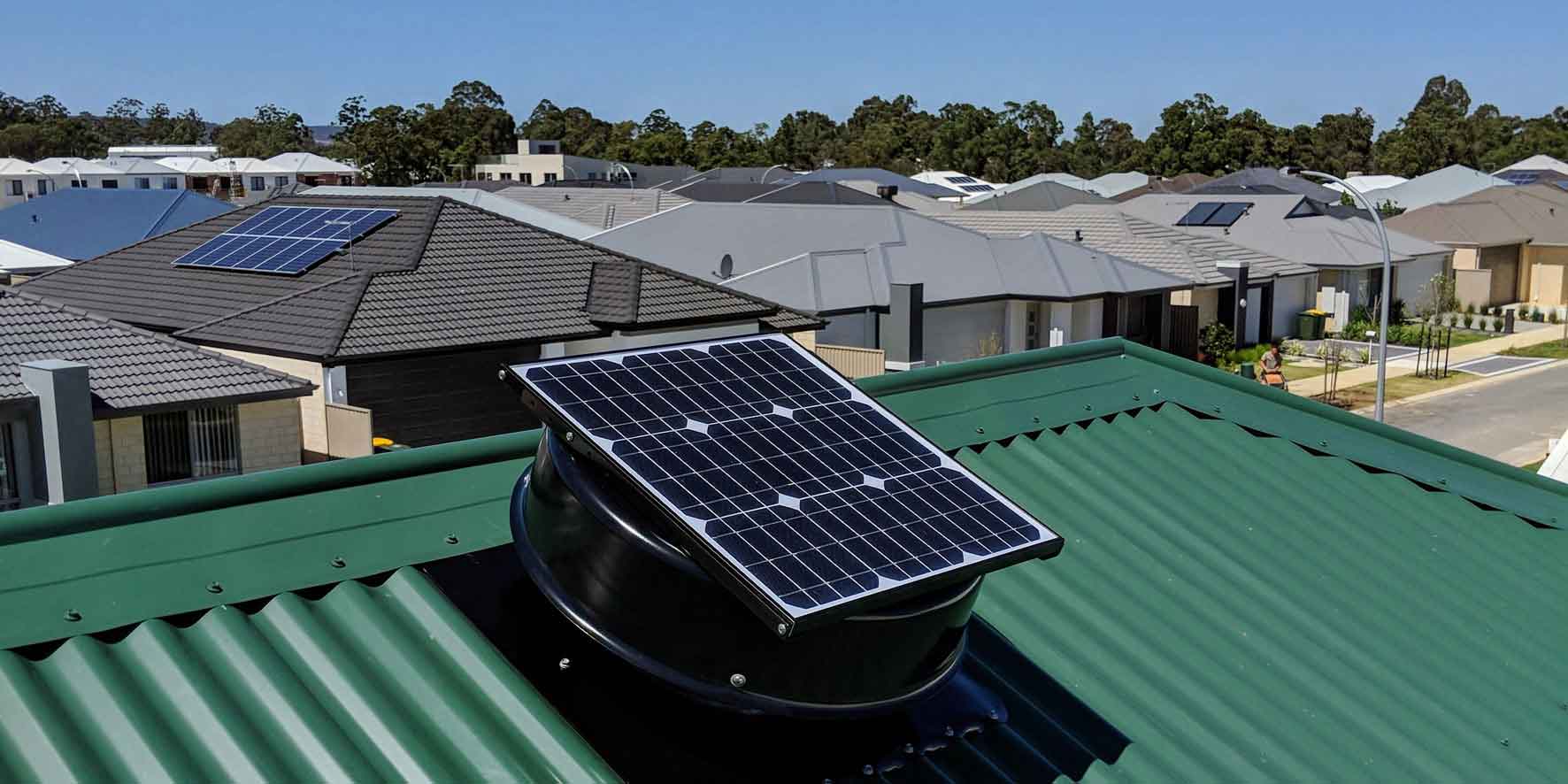
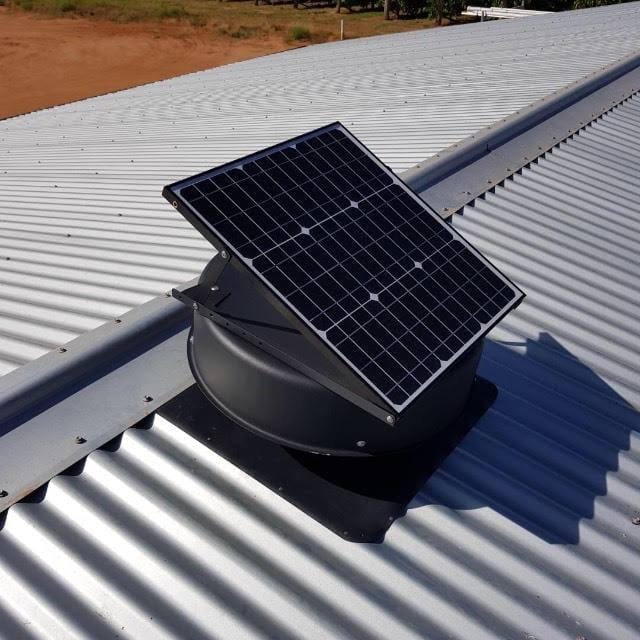
You know that feeling when the sun has gone down, but the house still seems to be holding onto the day’s heat? A very hot roof space can be part of the reason. The SolarKing V4 helps by drawing heated air out of the roof cavity and allowing outside air to take its place.
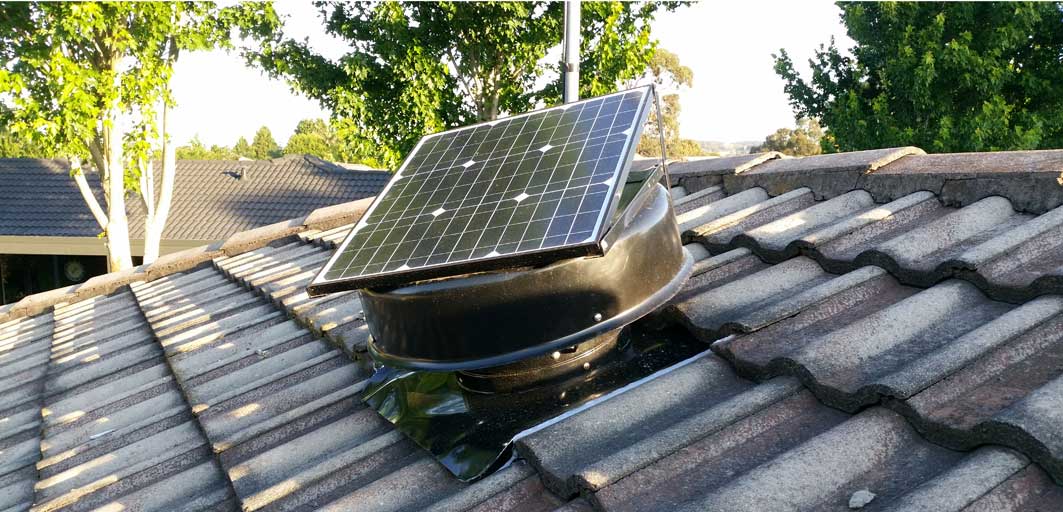
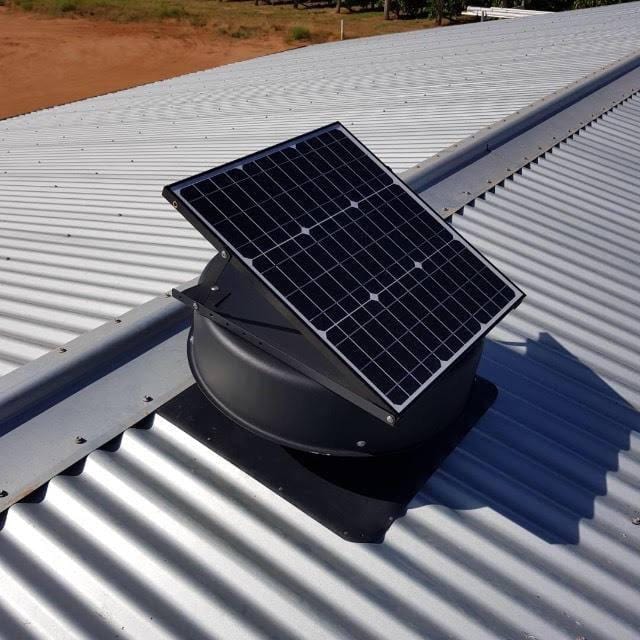
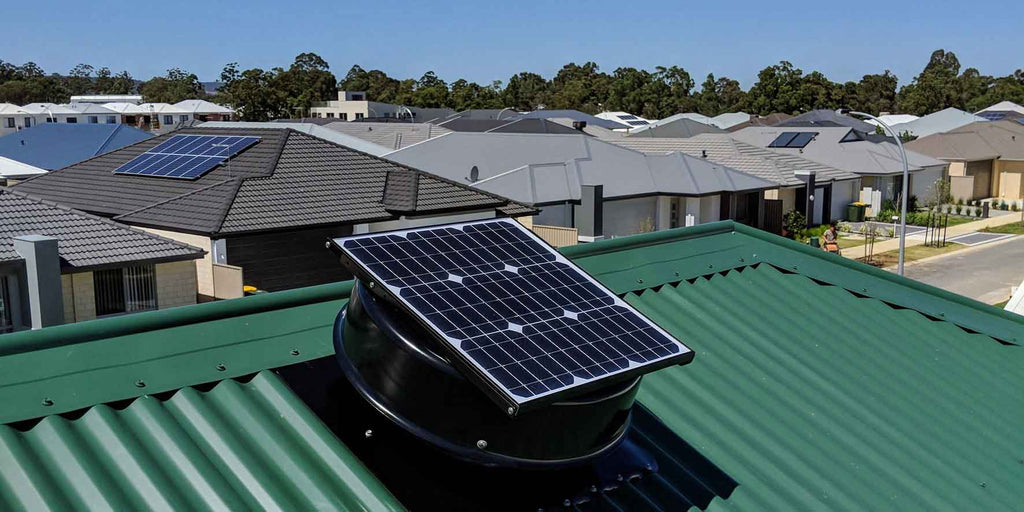
Many people call this type of product a solar whirlybird. The SolarKing is a solar powered roof fan: unlike a traditional wind-driven whirlybird, it uses a motor powered by its own solar panel. That means it can move air on a hot, still day, provided the panel has enough sunlight and the roof-space thermostat allows it to run.
This is the Standard V4 for people who want automatic roof ventilation without having to operate a remote. If you would like to control the fan speed, set timers or ventilate on demand, see the SolarKing Wireless V4 roof fan.
A cooler roof space starts with moving the hot air
Sunlight warms your roof, and the roof warms the air beneath it. Some of that heat can then pass through the ceiling into the rooms below. By extracting air from the roof cavity, the SolarKing helps replace the hottest air with air entering from outside.
It works best when there is a suitable way for replacement air to enter the roof space, such as properly designed eave vents. Ceiling insulation, shading and sealing gaps around the ceiling are also important. A roof fan can help reduce heat build-up, but it is not an air conditioner, and the effect inside a home will vary with the roof and the weather.
A standard whirlybird depends on wind and natural air movement. The SolarKing V4 has a brushless motor, so it can actively extract air while the sun is powering it. SolarKing states a maximum airflow capacity of 2,100 m³ per hour for this model.
That figure is the fan’s stated capacity, not a promise that every roof installation will move exactly that amount of air. Available sunlight, the position of the fan and the path for incoming air all affect the result.
If you have been searching for a solar whirlybird, solar powered whirlybird or an alternative to an existing roof vent, this is the model to consider when you want active ventilation without using mains power during normal solar operation.
How many solar roof fans will I need?
For some homes, one well-positioned fan is a sensible starting point. A larger or more complicated roof may benefit from two or more. We would rather help you choose for your actual roof than tell you that every house of a certain size needs the same number.
The important things to consider are:
The size of the roof cavity. The area of the house is only part of the picture; the height and shape of the space under the roof matter too.
The path for incoming air. The fan needs replacement air to enter the cavity. If the roof space is tightly sealed, fitting more fans may not solve the airflow problem.
The roof layout. Separate wings, gables or divided roof sections may need more than one extraction point to move air throughout the space.
Sun exposure. A panel shaded during the hottest part of the day will have less opportunity to power the fan.
For a rough calculation, multiply the roof area by the average height of the roof cavity to estimate its volume. For example, a 180 m² roof with an average cavity height of 0.8 m contains roughly 144 m³ of air. The SolarKing’s stated 2,100 m³/h capacity is much greater than that volume, but the calculation does not predict how the fan will perform once installed. Air inlets, restrictions and sunlight can make a substantial difference.
As a practical guide, we would consider one fan for a compact, connected roof cavity with good air entry, and look more closely at two or more for a long, divided or unusually large roof.
What happens on cloudy days or after sunset?
In its standard setup, the V4 runs from its solar panel when there is enough sunlight and the roof-space temperature is above its thermostat setting. SolarKing specifies automatic shut-off below approximately 25°C, subject to its stated tolerance.
An optional 240 V AC to 15 V DC backup power supply can be purchased separately. It allows the fan to receive power when sunlight is insufficient, including after dark, while the thermostat continues to govern operation. You will need a suitable power point for the power supply.
The Standard V4 does not include a remote control, speed adjustment or timers. If being able to turn the fan on during cooler conditions matters to you, compare the Wireless V4.
Built for Australian roofs
The V4 has a 42 W solar panel and a 35 W brushless motor. These are ratings for different parts of the fan. It also has an aluminium top cover and flashing, an electroplated steel body and brackets, and stainless-steel fasteners.
SolarKing lists the fan for suitable tiled, metal and flat-roof installations. The panel can be adjusted to make better use of available sunlight. The kit includes the fan, flashing, instructions and two rafter/batten straps. Correct fixing and waterproofing are essential, so follow the instructions for your roof type or have a roof plumber install it.
Key details
SolarKing 320 mm Solar Roof Vent V4 Standard
Stated maximum airflow: 2,100 m³/h
Solar panel: 42 W
Motor: 35 W brushless DC
Automatic temperature control
Approximately 320 mm roof opening
Optional backup power supply sold separately
Three-year manufacturer warranty
Can it help with moisture in the roof?
Air movement can help a roof space dry when there is a suitable ventilation path. If you have condensation or mould, though, it is important to find the source of the moisture. A leaking roof or a bathroom exhaust fan venting into the roof cavity needs to be fixed directly; adding a solar fan is not a substitute for that work.
Choose the Standard V4 if you want the fan to look after roof ventilation automatically. Choose the Wireless V4 if you want remote control, fan-speed adjustment and timers.
If you are weighing up one fan or two, get in touch with SatPlus before ordering. Tell us a little about your roof and what you are hoping to improve, and we will help you work through a sensible setup.
These fans are effective for cooling our house. This purchase was to replace one of our existing fans.
H
Helen
They work fantastic, have lowered the temperature in house.
Would recommend these Solarking roof vents.
Helen
J
Joel
Not worth it for me
The product appears to be good quality but I’m going to have to go against the grain and say this product is not worth it for a tiled roof with no sarking. Roof temps were 10 - 15 degrees above ambient before installing the fan and I haven’t noticed any real difference after installing the fan.
I guess having no sarking means the roof was already reasonably well ventilated naturally.
Hi Joel,
Sorry to hear you had no significant drop in temperature. This does seem strange as the fan will continue to draw out the hot air until the roof space reaches 25 degrees. If the sarking made such a difference, the fan wouldn't come on often through the day as the temp in the roof would need to be 25 degrees or lower and that is very unlikely. Make sure you have adequate ventilation to allow cool air to be drawn into the roof to replace the hotter air. Try installing a large vent under the eaves on the south side of the house. This cool air will replace the hot air and lower the radiated heat from the ceiling. Hope this helps. All the best.
Regards
John
C
C.
Fast delivery. Easy to install. Works great.
M
Matthew
Awesome product! Has made an immediate reduction to the temperature in the house.
It’s definitely quieter then earlier revision.
Records up to 10 programs at once including terrestrial channels. It took me a fare amount of time navigating the settings, but there are handy methods of setting the precise recording times.
I also noticed that the colour of the Hisense TV screen displayed by the UEC channels is softer than the screen displayed by the Hisense channels.
Overall, it is well worth the change over from earlier Altech UEC and then the Humax which both could not allow chase play without jumping out of the recording at the point of starting to watch the program while it was still recording.
Service and delivery was quick. I installed recently and so far, it's working very well. Note, there were a couple bolt and nuts missing for the panel bracket but a Bunnings visit fixed that.
You know that feeling when the sun has gone down, but the house still seems to be holding onto the day’s heat? A very hot roof space can be part of the reason. The SolarKing V4 helps by drawing heated air out of the roof cavity and allowing outside air to take its place.
Many people call this type of product a solar whirlybird. The SolarKing is a solar powered roof fan: unlike a traditional wind-driven whirlybird, it uses a motor powered by its own solar panel. That means it can move air on a hot, still day, provided the panel has enough sunlight and the roof-space thermostat allows it to run.
This is the Standard V4 for people who want automatic roof ventilation without having to operate a remote. If you would like to control the fan speed, set timers or ventilate on demand, see the SolarKing Wireless V4 roof fan.
A cooler roof space starts with moving the hot air
Sunlight warms your roof, and the roof warms the air beneath it. Some of that heat can then pass through the ceiling into the rooms below. By extracting air from the roof cavity, the SolarKing helps replace the hottest air with air entering from outside.
It works best when there is a suitable way for replacement air to enter the roof space, such as properly designed eave vents. Ceiling insulation, shading and sealing gaps around the ceiling are also important. A roof fan can help reduce heat build-up, but it is not an air conditioner, and the effect inside a home will vary with the roof and the weather.
A standard whirlybird depends on wind and natural air movement. The SolarKing V4 has a brushless motor, so it can actively extract air while the sun is powering it. SolarKing states a maximum airflow capacity of 2,100 m³ per hour for this model.
That figure is the fan’s stated capacity, not a promise that every roof installation will move exactly that amount of air. Available sunlight, the position of the fan and the path for incoming air all affect the result.
If you have been searching for a solar whirlybird, solar powered whirlybird or an alternative to an existing roof vent, this is the model to consider when you want active ventilation without using mains power during normal solar operation.
How many solar roof fans will I need?
For some homes, one well-positioned fan is a sensible starting point. A larger or more complicated roof may benefit from two or more. We would rather help you choose for your actual roof than tell you that every house of a certain size needs the same number.
The important things to consider are:
The size of the roof cavity. The area of the house is only part of the picture; the height and shape of the space under the roof matter too.
The path for incoming air. The fan needs replacement air to enter the cavity. If the roof space is tightly sealed, fitting more fans may not solve the airflow problem.
The roof layout. Separate wings, gables or divided roof sections may need more than one extraction point to move air throughout the space.
Sun exposure. A panel shaded during the hottest part of the day will have less opportunity to power the fan.
For a rough calculation, multiply the roof area by the average height of the roof cavity to estimate its volume. For example, a 180 m² roof with an average cavity height of 0.8 m contains roughly 144 m³ of air. The SolarKing’s stated 2,100 m³/h capacity is much greater than that volume, but the calculation does not predict how the fan will perform once installed. Air inlets, restrictions and sunlight can make a substantial difference.
As a practical guide, we would consider one fan for a compact, connected roof cavity with good air entry, and look more closely at two or more for a long, divided or unusually large roof.
What happens on cloudy days or after sunset?
In its standard setup, the V4 runs from its solar panel when there is enough sunlight and the roof-space temperature is above its thermostat setting. SolarKing specifies automatic shut-off below approximately 25°C, subject to its stated tolerance.
An optional 240 V AC to 15 V DC backup power supply can be purchased separately. It allows the fan to receive power when sunlight is insufficient, including after dark, while the thermostat continues to govern operation. You will need a suitable power point for the power supply.
The Standard V4 does not include a remote control, speed adjustment or timers. If being able to turn the fan on during cooler conditions matters to you, compare the Wireless V4.
Built for Australian roofs
The V4 has a 42 W solar panel and a 35 W brushless motor. These are ratings for different parts of the fan. It also has an aluminium top cover and flashing, an electroplated steel body and brackets, and stainless-steel fasteners.
SolarKing lists the fan for suitable tiled, metal and flat-roof installations. The panel can be adjusted to make better use of available sunlight. The kit includes the fan, flashing, instructions and two rafter/batten straps. Correct fixing and waterproofing are essential, so follow the instructions for your roof type or have a roof plumber install it.
Key details
SolarKing 320 mm Solar Roof Vent V4 Standard
Stated maximum airflow: 2,100 m³/h
Solar panel: 42 W
Motor: 35 W brushless DC
Automatic temperature control
Approximately 320 mm roof opening
Optional backup power supply sold separately
Three-year manufacturer warranty
Can it help with moisture in the roof?
Air movement can help a roof space dry when there is a suitable ventilation path. If you have condensation or mould, though, it is important to find the source of the moisture. A leaking roof or a bathroom exhaust fan venting into the roof cavity needs to be fixed directly; adding a solar fan is not a substitute for that work.
Choose the Standard V4 if you want the fan to look after roof ventilation automatically. Choose the Wireless V4 if you want remote control, fan-speed adjustment and timers.
If you are weighing up one fan or two, get in touch with SatPlus before ordering. Tell us a little about your roof and what you are hoping to improve, and we will help you work through a sensible setup.
Gary Webster
New Remote
Great service, with prompt delivery.
SatKing 800CA VAST Remote Control
Stephen Rice
Best satellite Decoder
Records up to 10 programs at once including terrestrial channels. It took me a fare amount of time navigating the settings, but there are handy methods of setting the precise recording times.
I also noticed that the colour of the Hisense TV screen displayed by the UEC channels is softer than the screen displayed by the Hisense channels.
Overall, it is well worth the change over from earlier Altech UEC and then the Humax which both could not allow chase play without jumping out of the recording at the point of starting to watch the program while it was still recording.